
Posted by Stephen Deuel on 5th May 2026
Felt vs. Received: Rethinking Intensity in Vibroacoustic Therapy
Note: This post shares my perspective as someone who has been designing and building vibroacoustic equipment for over 25 years, and as someone who uses it daily for my own neurological condition. I'm not a physician, and nothing here is medical advice or a treatment claim.
What Got Me Thinking About This
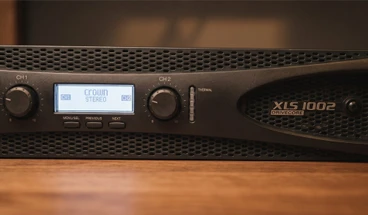
A pressure has been building in this field over the last several years, and it's gotten harder to ignore. The pressure to make sessions feel bigger. More transducers. More wattage. Louder amplification. Bass pitched as proof the equipment is doing something.
When I started in 1999, the field's center of gravity was different. The early work — Skille, Wigram, Lehikoinen — was built around gentle, sustained, low-frequency delivery. That's where the research came from. The "louder, bigger, more" framing is a more recent inheritance, and I think it's worth pushing back on.
After twenty-five-plus years of building tables, sitting on them, putting clients on them, and using one myself every morning to manage a progressive neurological condition, I've come to a clear position:
More power is not more therapy. More transducers is not more therapy. Louder is not more therapy.
That's not a marketing line. It's what the mechanism of vibroacoustic work actually tells us, and it's worth spelling out, because I think the field's drift toward bigger and louder has gotten in the way of the work itself.
What's Actually Happening in the Body
Here's the part that doesn't get talked about enough.
Vibroacoustic vibration is a mechanical wave. When it leaves the transducer and enters the table, it travels through whatever medium the table is built around — foam, water, wood, depending on the design — and from there into your body. About 70% of you is water. Bone is a remarkable conductor. Connective tissue stretches and rebounds. Sound at the frequencies VAT uses moves through all of it.
That happens whether or not your conscious perception lights up.
The nervous system is one channel of reception. It is not the only one. Mechanical waves are received by tissue at the cellular level via resonance — by fluids that begin to organize around the wave, by bone that conducts and re-radiates, by fascia that responds without ever asking the brain for permission. None of that requires your conscious experience to file a report saying "wow, that was strong."
This is the distinction I want to land on: felt is not the same as received. What you perceive in the moment is one signal. What your body is actually taking in is a much larger signal, most of it operating below the threshold of conscious sensation.
When someone turns the volume up because they want to "feel it more," they're not getting more therapy. They're getting more perception. The body was already receiving the vibration. They've just made it louder for the system that was already hearing it.
Where VAT Is Actually Trying to Take You
The therapeutic outcome of a vibroacoustic session isn't activation — it's the opposite. The goal is to shift the autonomic nervous system toward parasympathetic dominance: rest, restore, digest. Slower heart rate. Deeper breath. Lower blood pressure. The state where the body does its actual repair work.
That's a settling.
Cranking the volume runs against that. You can't blast a nervous system into calm. You can't pummel someone into rest. You can over-stimulate someone for thirty minutes and then wonder why they didn't drop in.
The body doesn't need to be convinced. It needs to be invited.
A well-designed vibroacoustic session offers a steady, evenly distributed, full-spectrum field of vibration that the body can sink into. The sinking is the point. The sound is held by the table. The body is held by the sound. The autonomic shift happens on its own.
That's the mechanism. It works at comfortable settling levels. It doesn't need an arms race.
Where the Pressure Comes From
I don't begrudge anyone in this field — I've watched it grow and I'm rooting for all of it. But it's worth being honest about why "louder, bigger, more" has become a default.
A lot of vibroacoustic gear gets sold at trade shows. Trade shows reward what's perceptible in thirty seconds. Someone walks by, lies down for a minute or two, and what they remember is the impact — the kick, the rumble, the sensation. The systems that win those moments are the ones built to make a strong first impression.
That selection pressure shapes the marketing. The marketing shapes the buyer's expectations. The buyer's expectations shape what practitioners think they're supposed to deliver. Pretty soon, "did you feel it?" becomes the proxy for "did it work?"
But a thirty-minute clinical session is not a thirty-second demo. Different game, different goals, different design priorities. A table that wins on the trade-show floor isn't necessarily the same table that produces the best outcomes in a long session with a sensitive client. Often it's the opposite.
None of this is anyone doing anything wrong. Foam-based tables, for example, can be excellent for the use cases they're designed for — we build foam-based tables ourselves, both a folding sound massage table and a stationary lift table. Many practitioners do beautiful work with them. There's room for a lot of approaches in this field. What I am saying is that intensity-on-demand is a marketing inheritance, not a clinical principle.
A Personal Note
I have bilateral sensorimotor polyneuropathy. My feet feel like I'm walking on river rocks. My legs feel wrapped, heavy. The perceived sensation in my lower body is genuinely diminished.
If "more is better" were the rule, I should be the first person reaching for the volume dial. I'm not.
I run my morning sessions at a comfortable, settling level. Not loud. The vibration moves through my bones, through my fluids, through tissue, regardless of how much my altered nerves are reporting back. That's the part that matters. The last time I had an EMG, the physician was surprised I wasn't in more pain — my study looked, on paper, like it should hurt more than it does. I don't claim to know exactly why. But I know what I do every morning, and I know I don't crank it up.
If anything, my condition has made me more committed to this position, not less. When the surface readout is unreliable, you have to trust the underlying physics. The wave is still going in.
Practical Guidance
For practitioners and prospective buyers, here's the way I'd put it.
Set a working level — clearly felt, comfortable, not pushed. That's where the therapeutic work happens. If a first-time client wants to feel it strongly at the start, briefly turn it up so they register what the table is doing, then settle to a working level for the session itself. "Less is more" doesn't mean barely felt — it means less than the volume that rattles you. A working level the body can sink into is what produces the autonomic shift. A session that stays loud is one the body braces against, and bracing is the wrong direction.
Don't read transducer count as a therapy signal. What matters is whether the body is receiving an even, full-spectrum field — and that depends on the transmission medium, the placement, and the design of the resonant field, not the parts list. In a resonant medium, additional well-placed transducers can fine-tune distribution; they don't multiply therapeutic effect. In a less conductive medium, more transducers may be needed just to compensate for uneven distribution. Either way, the question to ask is what the body is actually receiving — not how many drivers are bolted to the frame.
For sensitive systems, soften, don't compensate. Neuropathy, autism, sensory processing differences, post-surgical recovery, trauma response — these populations especially benefit from lower, even, sustained delivery. The instinct to "make sure they feel it" is exactly the instinct to resist.
Trust that the session has time. A thirty-minute session is not trying to make an impression in the first thirty seconds. The autonomic shift unfolds over the course of the work. Don't rush it with intensity.
Educate your clients. The most useful thing you can tell a new client is that the absence of strong sensation does not mean nothing is happening. Often it means the opposite — they're settling. The body is receiving the work. Their job is to let it.
What We've Built Inner Soulutions Around
The Liquid Sound Table is built for the long session, not the demo. Water as a transmission medium delivers an evenly distributed, full-spectrum vibration that the body can settle into, hold after hold, minute after minute.
The standard two-transducer configuration is fully capable of moving the whole body — sternum, pelvis, the rest — efficiently when activation is what the moment calls for. It just doesn't need to in order to do its therapeutic work. The optional third transducer is available for practitioners who want a different distribution pattern, but it's not what makes the table work. The water is.
Our VAT frequency catalog was developed with the same philosophy. The frequencies are designed to be felt across the body — through bone, fluid, tissue — at comfortable, settling levels. Not to push sensation. To deliver resonance.
That's the work. That's what twenty-five-plus years of building these has taught me. The body receives more than it perceives, the autonomic nervous system settles when it's invited rather than overpowered, and the equipment that serves that goal is the equipment that knows the difference.
Explore the Tools
If you'd like to see how this is built, and how it's used in practice, you can explore our Liquid Sound Table and VAT Frequencies & Music.
And whatever equipment you're working with — yours, mine, or something else entirely — the principle holds. Set comfortable, settling levels. Trust the delivery. The body is taking it in.
As always, talk with your own clinicians about what makes sense for your situation.
About the author
Stephen Deuel is the founder of Inner Soulutions LLC in Grand Island, NY, where he has designed and handcrafted vibroacoustic equipment since 1999, with 800+ tables delivered worldwide. His early years in vibroacoustics were spent in correspondence with Olav Skille, the Norwegian researcher who defined the field. The quoted excerpt above is from a 2005 letter in that correspondence. Stephen designed the four VAT frequency series (Muscle & Structural, Pain Management, Human Body, Energy & Balancing); his son Chris Deuel composes the vibroacoustic music.